
I Signed Up for a River Cruise and Got a 13-Hour Bus Ride
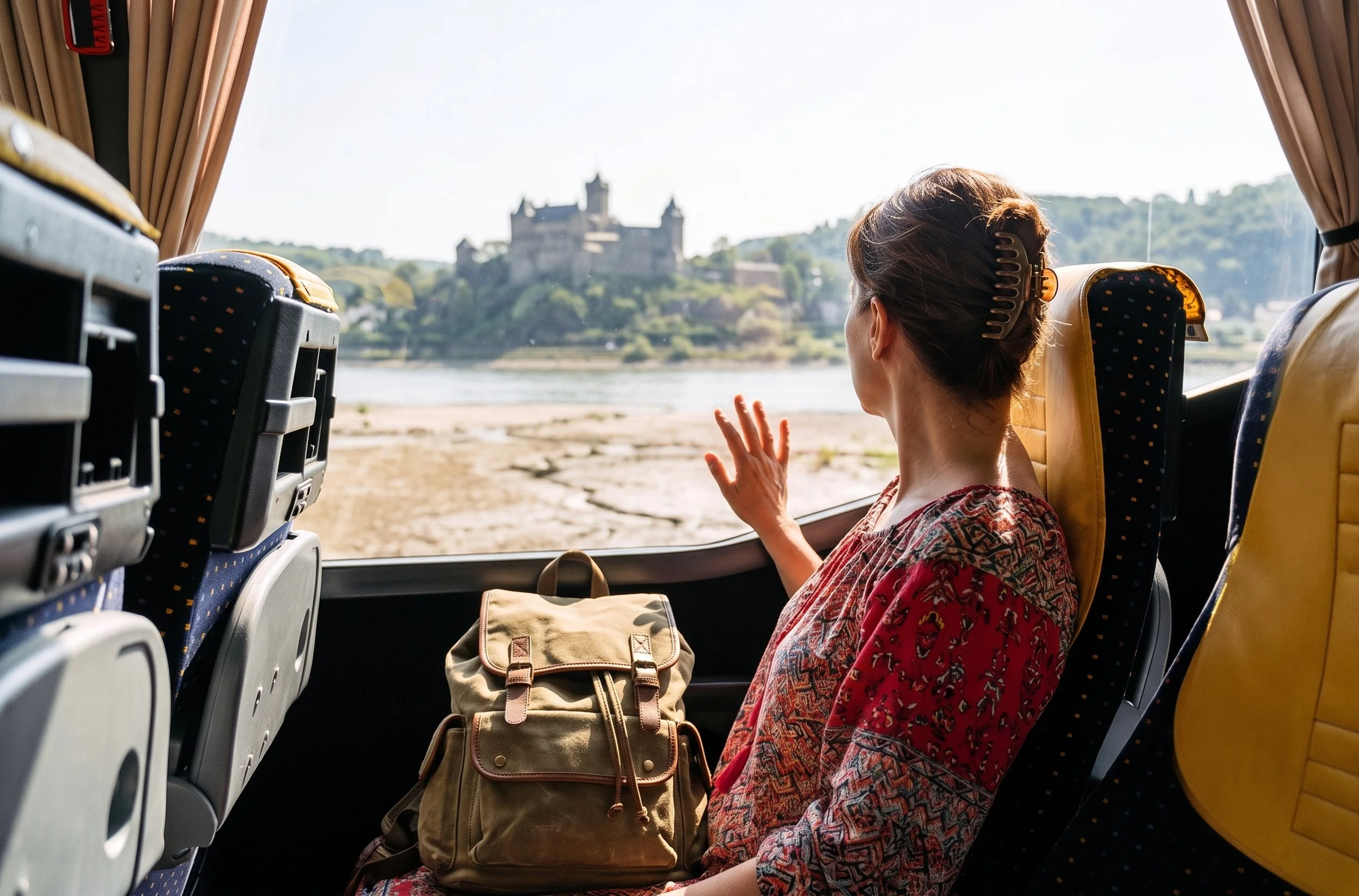
What happens when the river runs dry, the free-flowing wine disappears, and a seven-day warning turns your dream voyage into a motorized endurance test.
I fell in love with river cruising for a reason.
There is pure magic in waking up in the middle of the night, watching moonlit water slip past your stateroom window, sitting on the top deck sipping wine, and learning about ancient castles, monasteries, and steep-sloped vineyards. I love the camaraderie that forms organically as guests bond over off-the-boat excursions and share lively dinner conversations.
So when I was given the opportunity to try another cruise line recently, I jumped at the chance.
Then reality hit. A week before our trip, after I had already purchased non-refundable airfare and paid for pre and post-trip hotel adventures, we were notified that historically low water levels on the Rhine meant our itinerary was going to be drastically altered.
Instead of seven nights settling into our stateroom and unpacking just once, we spent four nights on the ship, followed by a land-based hotel pivot. From start to finish, the transition involved a brutal 13-hour travel day with just one meal and a single granola bar. Packing and unpacking multiple times, being isolated from the other guests in third-party hotels, and losing that effortless shipboard community was less than ideal.
The beer and wine that flowed freely on the ship during our meals? Gone or painfully restricted once we were moved to land hotels. That 24/7 supply of coffee, pastries, and cozy lounge spaces? Disappeared. Meals defaulted to rigid, single-choice banquet menus with zero flexibility unless you had dietary restrictions.
I kept telling myself, "Well, they're doing their best." But honestly? Were they?
When cruise lines face low water, offering only future cruise credits, while leaving travelers on the hook for non-refundable airfare, hotels, and land packages they’ve already paid for, feels pretty crummy.
As a travel advisor, I went through this painful disruption so I could learn from it firsthand. But it reinforced one absolute truth: The more you know, the more you protect yourself.
The Unvarnished Truth About Low (and High!) Water Levels
River ships run on living waterways, not open oceans. When a dry, hot summer strikes Europe, water levels on rivers like the Rhine and Danube drop. When heavy spring snowmelt or torrential rain hits, rivers surge and bridges become too low for ships to clear. When conditions reach critical pinch points, ships simply cannot pass.
When this happens, cruise lines typically look to two main contingency operations:
Sister-Ship Swaps (When Conditions Allow): The ideal scenario. One ship sails upstream, another sails downstream toward a single shallow pinch point. Guests simply transfer their luggage across the shallow zone by coach and board an identical sister ship on the other side, preserving the shipboard dining, amenities, and stateroom experience. However, even ship swaps aren't a guaranteed fix. If water levels are severely low (or too high) across multiple stretches of the river, ships get trapped in separate sections, making continuous sailing or coordinated swaps impossible.
Bus & Hotel Pivots: When swaps fail or aren't viable, the cruise line docks the ship and moves guests into land hotels, busing them back and forth to excursions. This is the scenario that breaks the river cruise experience, trading unpacking once for a revolving door of hotel check-ins, rigid set menus, and disjointed service.
How to Protect Your Vacation (In My Humble Opinion)
You cannot control Mother Nature, but you can control how you book and prepare. If I were booking a major river cruise today, here is how I would approach it:
Look Beyond the Brochure at Fleet Capabilities: Not all river cruise lines are playing with the same hand when water levels drop. A line’s ability to keep your trip on track comes down to three operational advantages:
Hull Engineering & Draft Depth: Lines that design custom shallow-draft vessels (like AmaWaterways or Avalon Waterways) require significantly less clearance beneath the keel, allowing them to glide right through critical pinch points while heavier, deeper ships get stranded.
Fleet Scale for "Sister-Ship Swaps": Lines with massive, identical fleets sailing in opposite directions (like Viking) have the volume to pull off ship-to-ship transfers when an issue is isolated to a single stretch of the river, preserving your cabin layout and shipboard experience.
European Ground Infrastructure: Brands backed by major European touring operations or deep local roots (such as Avalon with the Globus network, Uniworld with The Travel Corporation, and AmaWaterways with their extensive European operational footprint and long-standing regional partnerships) have established contracts with vetted motorcoach companies and high-end hotels. If a ship does have to dock, they have the logistical muscle and local connections to secure better accommodations and smoother transfers rather than scrambling at the last minute.
Look Closely at Comprehensive Travel Protection: Future cruise credits from a cruise line do not cover your out-of-pocket flights, independent hotels, or pre-paid excursions. If I were traveling as a guest facing a massive itinerary gutting, I would want to know my independent third-party policy has robust trip interruption and travel delay coverage so I have the power to make decisions that protect my peace of mind.
Work with an Advisor Who Knows the Terrain: Glossy brochures will never walk you through what low-water season actually looks like or how different lines handle it. An experienced advisor helps you choose the right river, season, and ship design from the start, and sets realistic expectations so you aren’t caught off guard if Mother Nature intervenes.
European river cruising remains an incredible, deeply rewarding way to see the world. But it deserves radical honesty because your vacation time, your hard-earned money, and your peace of mind are far too valuable to leave to chance.
